Forest Energy finances solar and battery systems for businesses, farms and estates, through Power Purchase Agreements (PPA) and Rent-to-Own. They wanted a way to handle a lot more leads without hiring a lot more salespeople, and that’s a job AI is well suited to.
(Screenshots of the system are redacted in places for privacy.)
Their sales process hinges the prospect’s electricity bill. With the bill, Forest Energy can work out the savings and put a proposal together without anyone driving out for a site visit.
So the goal was clear: get as many of the right businesses as possible to send their bill, without a salesperson having to chase each one.
What we built has three parts. Facebook & Instagram ads that open a WhatsApp chat, an AI agent that runs the conversation, and a dashboard called Canopy where the Forest Energy team manage leads.
From an ad to a WhatsApp chat in one tap
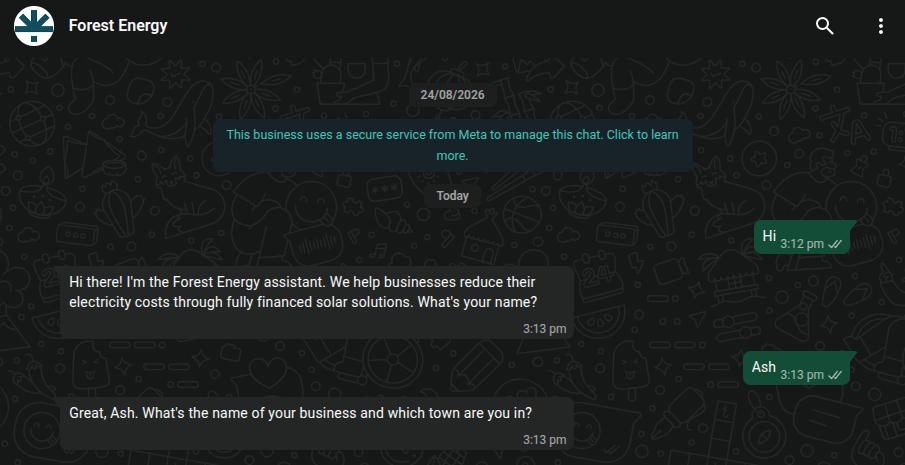
The campaigns run on Facebook and Instagram as Click-to-WhatsApp ads, aimed at commercial, industrial and agricultural businesses. Tap the ad and you’re in a WhatsApp chat with Forest Energy, and the agent says hello.
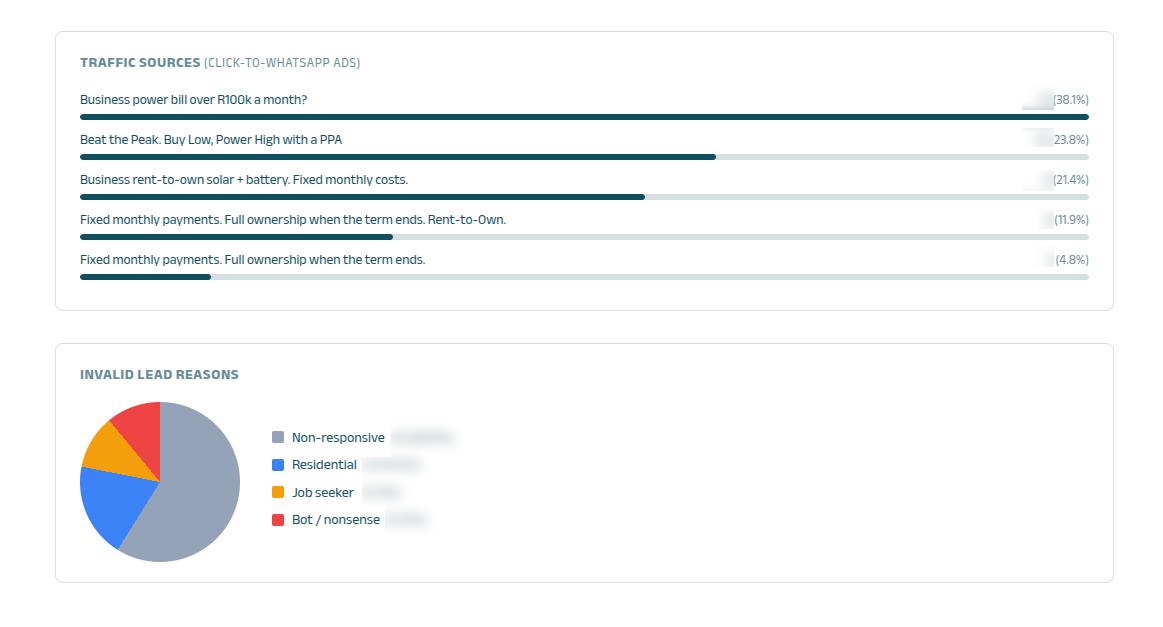
Every conversation remembers which ad it came from. The agent reads the ad’s headline, so someone who tapped a Rent-to-Own ad hears about Rent-to-Own first, and someone who tapped a PPA ad hears about PPA. The analytics show which ads are actually bringing in conversations.
It also talks back to Meta. When the team confirms a lead is real, Canopy sends a qualified-lead signal to Meta’s Conversions API. Facebook can then optimise for people who send their bills, and not just people who like tapping on ads.
The agent
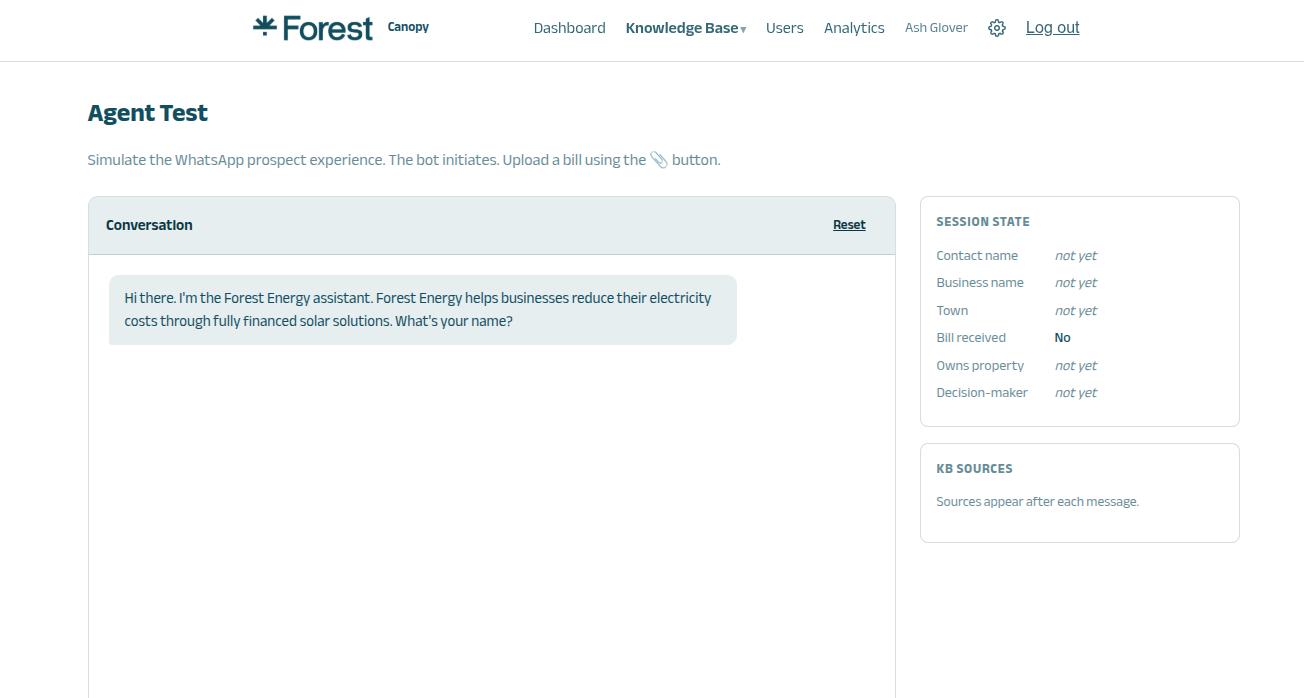
The agent runs on Anthropic’s Claude, and its job is a short, friendly conversation:
- Say hello, and get the person’s name, business and town
- Ask for their latest electricity bill (a PDF or a photo is fine), then for up to 12 months of bills
- Ask what kind of business they run, from a WhatsApp list (retail, manufacturing, poultry, dairy, winery and so on), because that changes how Forest Energy models their energy use
- Ask if they own or rent the property
- Answer whatever questions come up along the way
It reads every bill, pulling out the monthly usage, peak and off-peak usage, demand charges, tariff, municipality and account number. Then it checks whether the business uses enough electricity for Forest Energy to help. Send it a photo of your dog instead of a bill and it’ll tell you, nicely.
Its answers come from a knowledge base built from the Forest Energy website: their solutions, financing options, projects, FAQs, and articles. Where the website didn’t have an answer, we sent questions to Forest Energy’s sales team, and their approved answers went into the knowledge base too. So the agent answers with Forest Energy’s own information, not generic solar advice from the internet.
It replies in English, Afrikaans or another South African language, depending on how the person writes to it. It also knows its limits. If someone asks for a human, it hands the chat over and alerts the team on WhatsApp and email, with a link straight to the conversation. Job seekers get pointed to the website, and spammers get a polite goodbye.
If a prospect goes quiet, they get a follow-up after two days. Two follow-ups at most, and only on weekdays during office hours (nobody wants a solar sales message on a Sunday night). Reply STOP, and that’s the end of it.
Canopy, the dashboard
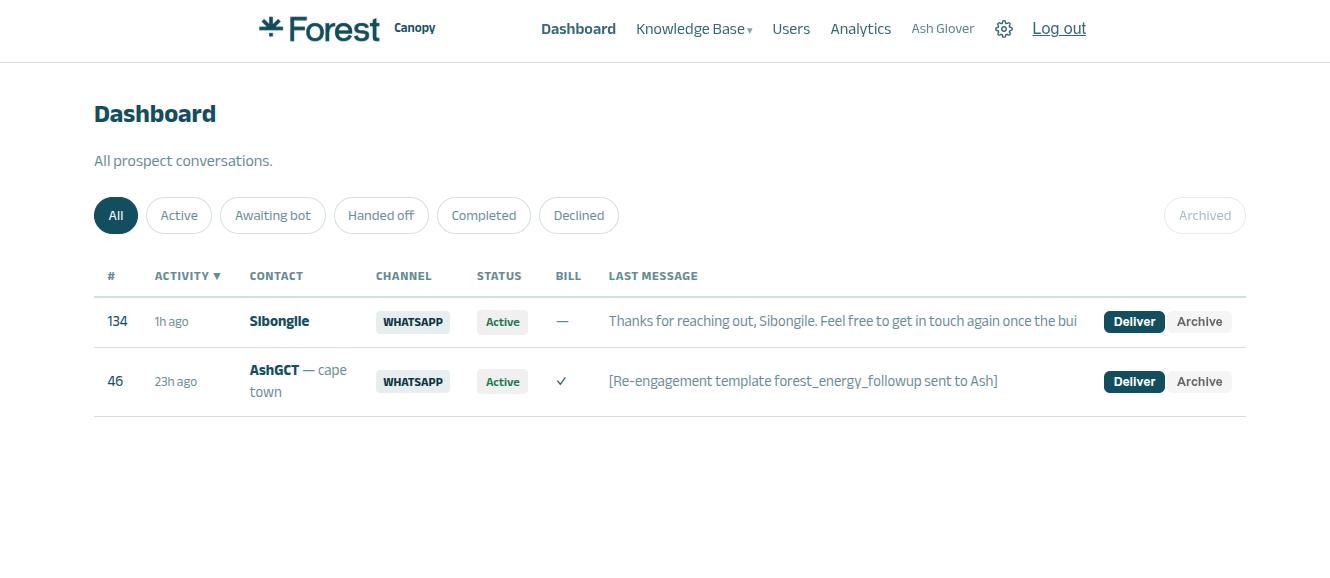
Canopy is where the Forest Energy team works. The inbox shows every conversation and updates live, filtered by status: active, handed off, completed or declined. Open a conversation and you see the full chat, the contact details, and everything the agent read off the bills.
From any conversation, the team can:
- Take the chat over from the bot and reply themselves, then hand it back. The bot picks up knowing what was said while it was away.
- Hit Nudge, and the AI writes a follow-up asking for whatever is still missing.
- Deliver the lead. One click emails the bills, a spreadsheet of the details and a Word transcript of the chat, ready for the proposal team.
- Send the finished proposal back to the prospect as a PDF, in the same WhatsApp chat.
- Mark a lead as completed, declined, or not a real lead.
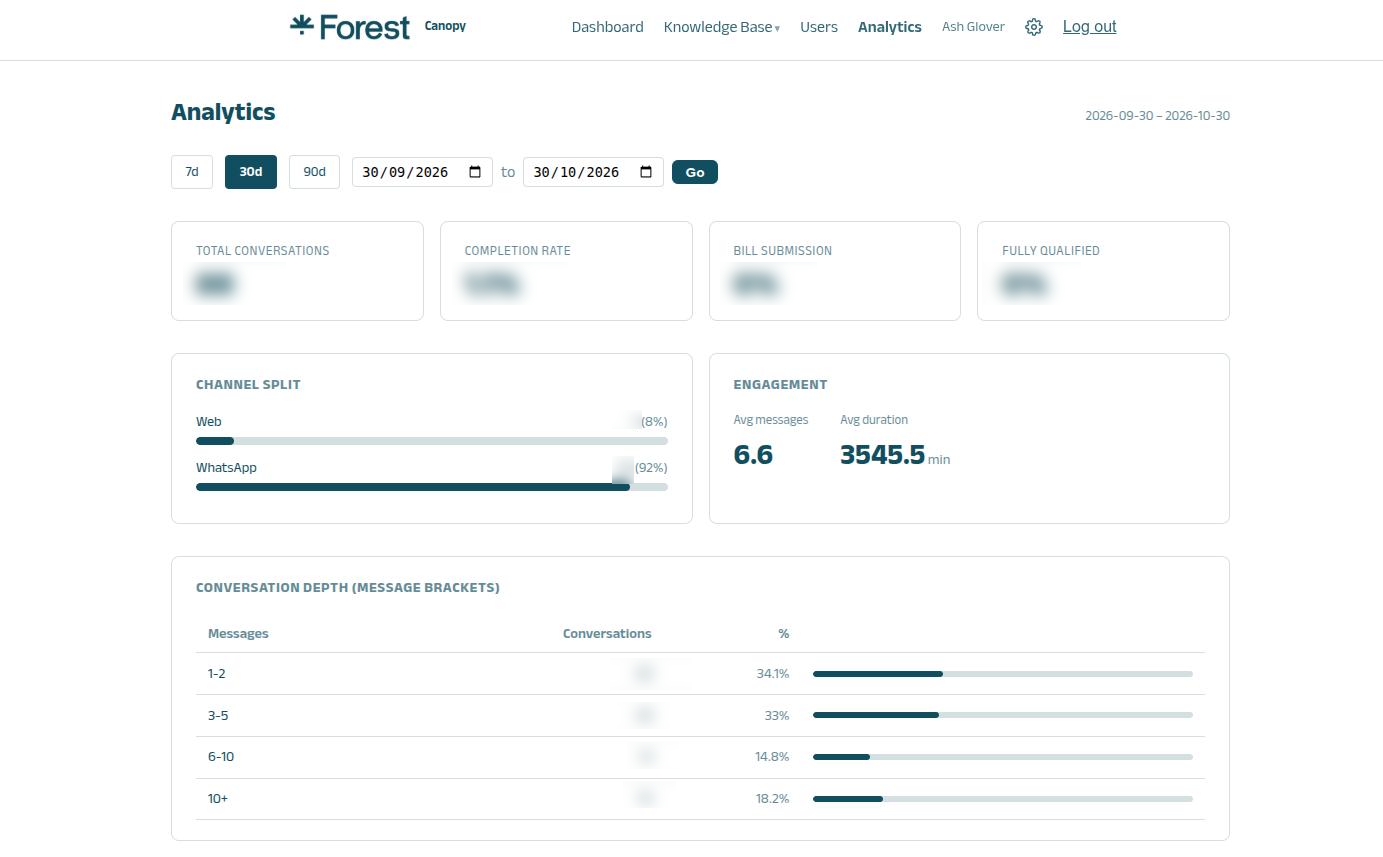
The analytics page shows how many conversations came in, how many sent bills, which towns and business types they came from, which ads brought them in, and why leads were turned away.
Myself and the team also train the agent. In the training view, we click on any reply the bot gave and leave a comment on it. The system sorts each comment into a change request, or a bug report, so the agent keeps improving based on what the sales team sees in real conversations. There’s a test chat in the browser too, so changes get tried out before they go anywhere near a real prospect.
How it all fits together
A business owner taps an ad, and is chatting to Forest Energy on WhatsApp. The agent collects their bills and details, answers their questions, and works out whether they’re a fit.
The team opens Canopy to a qualified lead with the bill already read, sends the proposal back through the same chat, and Facebook finds out which ad produced that lead.
The AI does the repetitive back-and-forth, and the Forest Energy team spends their time on businesses that have sent a bill and are a good fit.
Which is pretty much the whole point of an agentic workflow.